AI & Search
Google AI Mode books hotels in the US. UK and European operators have time to prepare.
In the US, a guest can now find and book a hotel room without visiting the property's website. Google AI Mode handles the search, the comparison and the checkout in one conversation, with the booking going through one of its ten launch partners. While this feature is not yet available in the UK and Europe, it's a good time for independent operators to prepare ahead of these changes being announced.
 Colin HarrisonFounder28 September 2026
Quick answer
Since the 27th August 2026, travellers in the US have been able to find, compare and book a hotel without leaving Google AI Mode. Every booking goes through one of ten partners, all of them hotel chains or large online travel sites. That moves the checking step guests used to do on your website inside Google, and for an independent, the only bookable version of you there is your OTA listing. Google hasn't said when this will reach the UK or Europe. Until it does, independent operators have time to make their own website the reason a guest steps outside the chat and books direct.
Google now takes the booking
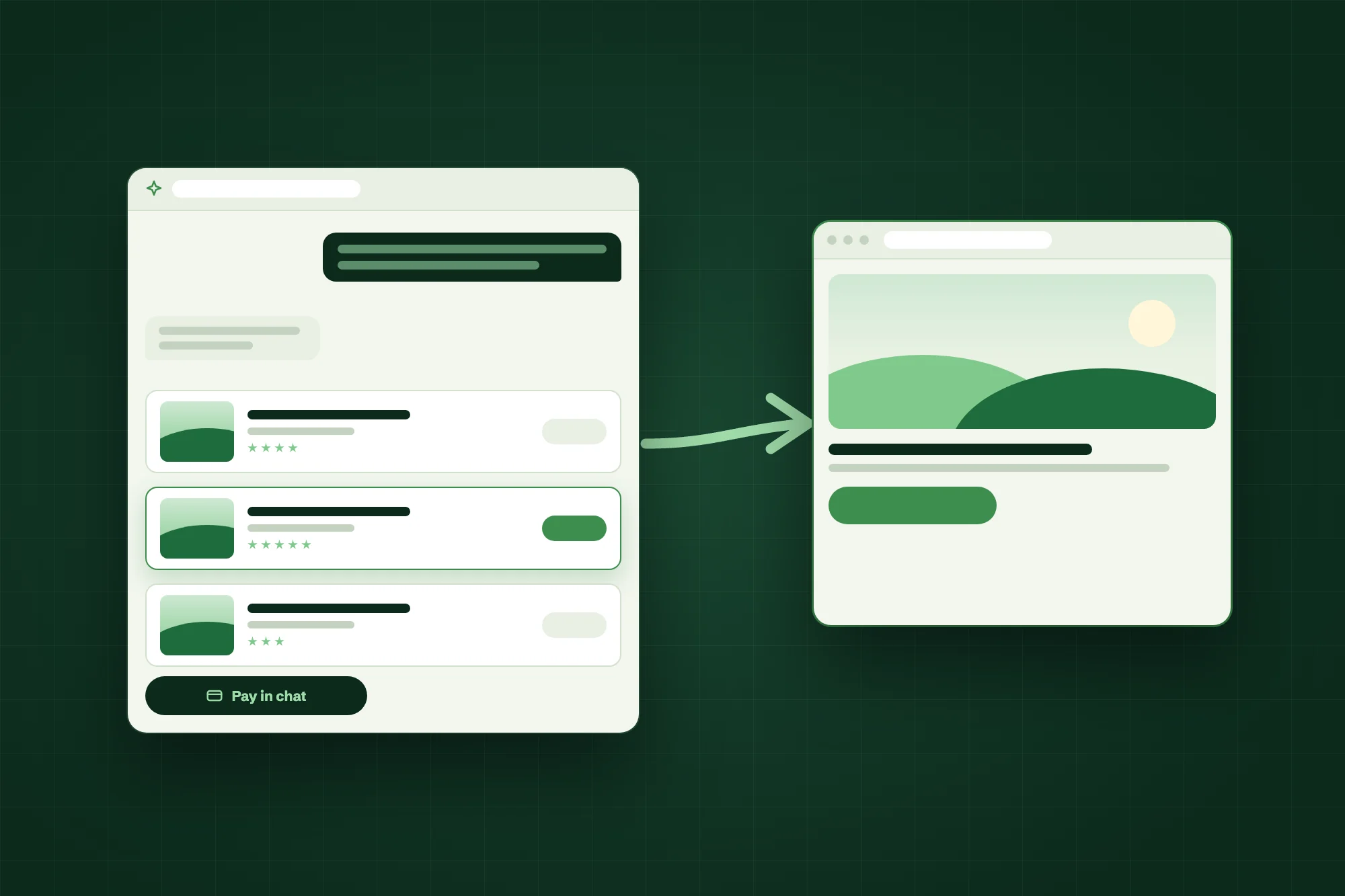
On 27 August 2026, Google announced hotel booking inside AI Mode. A guest tells Google AI Mode about their proposed trip and what they're looking for, and it comes back with a visual list of hotels, complete with guest reviews and the key details to compare. Once they've found one they like, they tap “Continue on Google”, pick a room, check the cancellation policy and pay with Google Pay. They never have to leave the conversation.
For independent operators in the UK and Europe, that's an early look at how guests could soon choose and book a stay without ever reaching your website. Some guests will still visit your site to check you're what they're looking for, but Google AI Mode is designed to make that step unnecessary, with the reviews, room details, cancellation policy and payment all in the chat.
Once the guest pays, the booking itself sits with the hotel or booking platform, which is still the merchant of record. It sends the confirmation and deals with any customer service, while Google handles everything up to that point. For an independent, that platform is an OTA.
This has been a while coming, too. According to Search Engine Journal, Google first said it would bring booking into AI Mode in November 2025, nine months before launch.
10 launch partners. Five hotel chains and five online travel sites.Chains: Choice Hotels International, Hilton, IHG Hotels & Resorts, Marriott International, Wyndham Hotels & Resorts. Online travel sites: Booking.com, Expedia, Hotels.com, Priceline, Trip.com.Google, August 2026
Google AI Mode moves the checking step inside Google
In our post, AI is the front door for travel bookings; we looked at what guests do after AI recommends somewhere to stay. A March 2026 Yext survey found 58% of US consumers go straight to the business's own website. Guests were finding properties through AI, then coming to the property's site to check it out before they booked.
Now, the reviews, the room options, the cancellation policy and the payment are all in the chat, so a guest can do their checking and their booking without ever leaving Google.
For a hotel chain, that's no problem, because the chain is probably a launch partner. But for an independent, the only version of you a guest can book in that chat is your OTA listing. A guest who once would have found you, checked your website and booked direct can now book the same stay through an OTA, and you pay commission on it.
That changes what your website is used for. It's no longer mainly where guests discover you, and it won't be where every guest checks you out either. Its job is to win the guests who still choose to step outside the chat, and those are the bookings worth fighting for.
Slow websites send guests back to the chat
When we tested 606 independent accommodation websites, the average took 13.3 seconds to load on mobile. That's far too long. Google's own benchmark says a page's main content should load in 2.5 seconds or less, and anything over four seconds counts as poor. 86% of the sites we tested took longer than four seconds, and only 1% loaded in under two.
13.3 seconds. The average mobile load time across 606 independent accommodation websites we tested.BookedWild site speed crawl, 2026
Google describes checkout in AI Mode as a few taps with Google Pay. That's the comparison your guest now makes. In the chat, they can book your OTA listing in seconds. On your own site, they may still be waiting for the homepage to load.
Until now, a slow site cost you some of the guests who arrived. With AI Mode, a slow site gives guests a reason to stay in the chat and book the easy way. Speed, live availability, a clear price, and a booking flow that doesn't ask for an account before showing dates are what decide whether they book direct. Our frictionless booking post walks through what that flow should look like.
Why independents feel it most
Google has only launched AI Mode booking for hotels, and it hasn't said whether other types of accommodation will follow. But the format shows where the pressure lands. AI Mode answers a trip question with a comparison list, and a comparison list favours whoever is easiest to line up side by side, which means chains and properties with complete OTA listings.
That's where independent hotels feel it first. They appear in the same comparison list as the chains, but not on equal terms. A chain can be booked through its own launch partnership with Google, while an independent hotel can only be booked through an OTA, and only if its listing is complete enough to hold its own alongside them.
Glamping sites and holiday lets aren't in scope yet, but Booking.com and Expedia, both launch partners, list them too. For glamping sites, the challenge has always been discovery, because guests rarely know you exist until something puts you in front of them. If that discovery moves into a chat where the bookable options come from OTAs, your OTA listing becomes the way guests find you. For holiday lets, the challenge is standing out from every similar property nearby. A comparison list narrows the choice to price, reviews and a few details, which makes that harder.
The answer is the same for all of them. The more clearly your own website shows what makes your place different, the more reason a guest has to look beyond the list.
Google AI Mode hasn't reached the UK or Europe yet. That's your head start.
Right now, AI Mode hotel booking is only available in the US, in English, and Google hasn't given a date for Google AI Mode booking in the UK or Europe and they might not get it at the same time.
Google has already held back flight price tracking and parts of its points-and-miles pricing in the European Economic Area, which covers the EU plus Iceland, Liechtenstein and Norway. But that's not to say that the UK and Europe won't eventually get these features.
180+ countries and territories got AI Mode flight price tracking at launch. EEA countries were excluded.Google, August 2026
That's good news for independent operators. In the US, AI Mode booking is already live. Here, you have time to get ahead of the curve and to make your listings and website as strong as they can be before guests start booking in the chat. The work that decides whether a guest steps outside the chat and books direct takes weeks, not days, so the operators who start now will be the ones who still stand a chance when it lands. Here's where to start.
Three places to start
Match your information everywhere
Rooms, prices, policies and photos should say the same thing on your website, Google Business Profile and OTA listings. Cancellation terms matter most, because AI Mode shows them to the guest before they pay.
Make your website easy for AI to read
Clear structured data tells AI engines what your property is, where it is and who it's for. Our schema post, llms.txt post and AI visibility post cover how.
Cut the steps between arrival and booking
Give guests a fast site, live availability, a clear price and no account to create before they can see dates. That's what makes booking direct as easy as staying in the chat.
Our Conclusion
Google AI Mode doesn't create a new problem for independent operators. It makes the existing one harder to ignore. A guest can now go from first question to confirmed booking without visiting your website, and for an independent, that booking goes through an OTA.
OTAs are still a useful channel, and nobody needs to walk away from them. But every guest who books direct means more margin stays with you, and AI Mode raises the stakes on whether that guest can find your site, trust it and book on it in a few taps. The operators who come out ahead will be the ones whose website gives guests a reason to leave the chat.
The UK and European delay is the time to do this work, before Google AI Mode booking arrives rather than after.
Get your website ready before Google AI Mode booking reaches the UK and Europe.
Your homepage is usually the first page a guest lands on when they step outside the chat, and the place they decide whether to book direct. If you're short on time to tackle it yourself, apply for a homepage redesign and see how we could help.
Got it. We'll be in touch.
One of us will read what you've written and come back with a straight answer — not a proposal template.
FAQs
Can UK travellers book hotels in Google AI Mode?
Not yet. Google launched hotel booking in AI Mode for US users searching in English on 27 August 2026, and it hasn't given a date for the UK or Europe.
Who are Google's AI Mode hotel booking partners?
The ten launch partners are Booking.com, Choice Hotels International, Expedia, Hilton, Hotels.com, IHG Hotels & Resorts, Marriott International, Priceline, Trip.com and Wyndham Hotels & Resorts.
Who handles the booking when a guest books through AI Mode?
The hotel or booking platform is the merchant of record, so it takes the payment, sends the confirmation and handles customer service. Google looks after the search, comparison and checkout screens.
Can an independent hotel appear in Google AI Mode booking?
Only through a listing on one of the partner online travel sites. There's no direct route for independent properties, so the booking comes with that site's commission.
Can glamping sites or holiday lets be booked through AI Mode?
Google has only announced hotel booking so far, and it hasn't said whether other types of accommodation will follow.
How can UK operators prepare for Google AI Mode?
Make sure your details match across your Google Business Profile, OTA listings and website. Add structured data so AI engines can read and cite your site. Then make your direct booking path fast and simple on mobile.